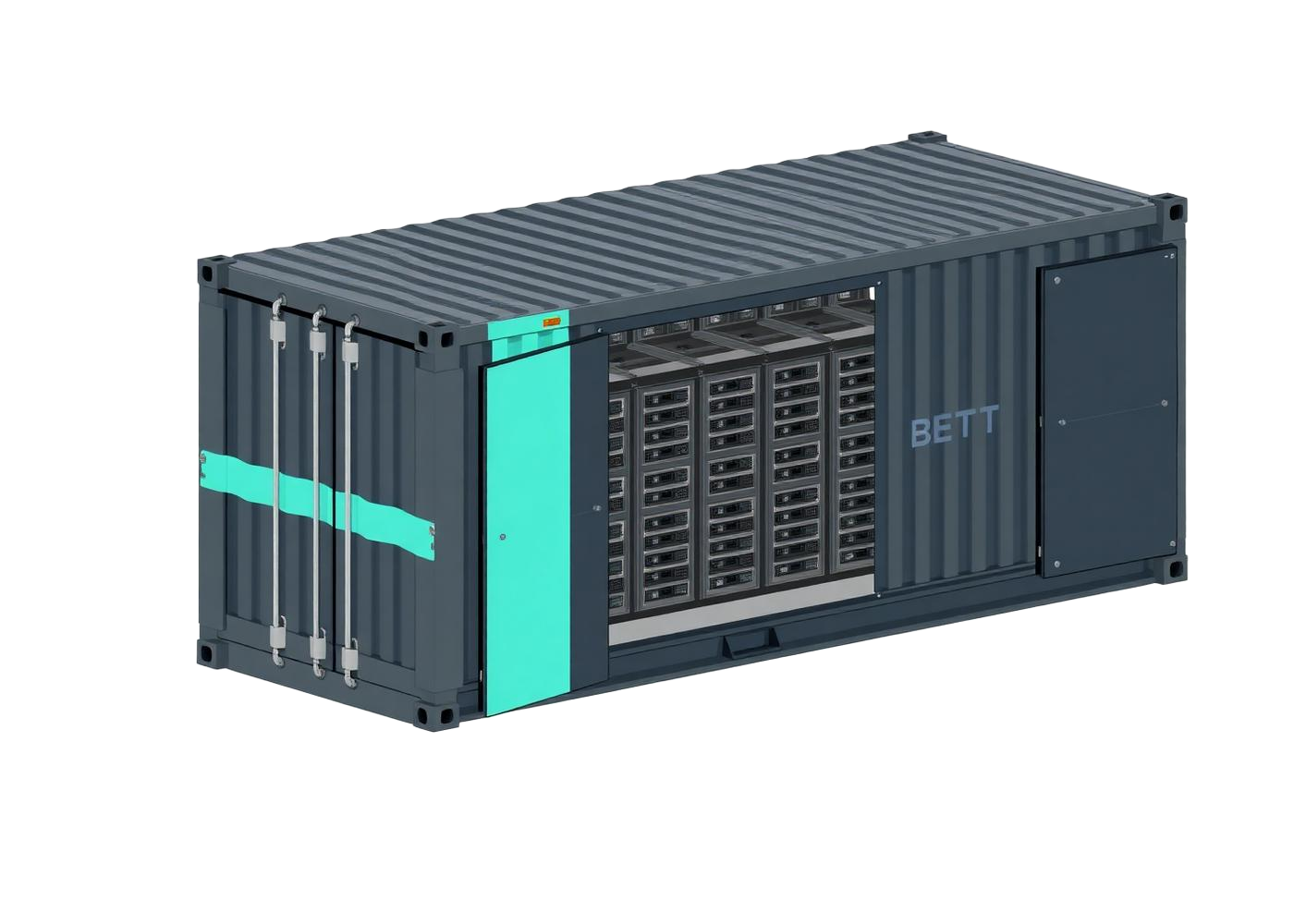
German-engineered BESS containers for the AI infrastructure era.
N54° Battery GmbH is being established to manufacture containerized battery energy storage systems — purpose-built for grid-scale storage, data center resilience, and renewable integration.
Storage is the bottleneck of the energy transition — and of AI compute.
Hyperscale data centers, grid operators, and renewable developers are competing for the same scarce resource: deployable, cost-competitive battery capacity. N54° is being established to serve that demand from European soil, with German quality standards and industrial-scale economics.
- Grid-scale storage & frequency regulation
- Data center backup and power-smoothing
- Renewable integration & curtailment recovery
- Hardware and software developed in Germany, built to comply with European cybersecurity regulations for critical infrastructure and defence
SafeCore™ — engineered for safety where people live and work
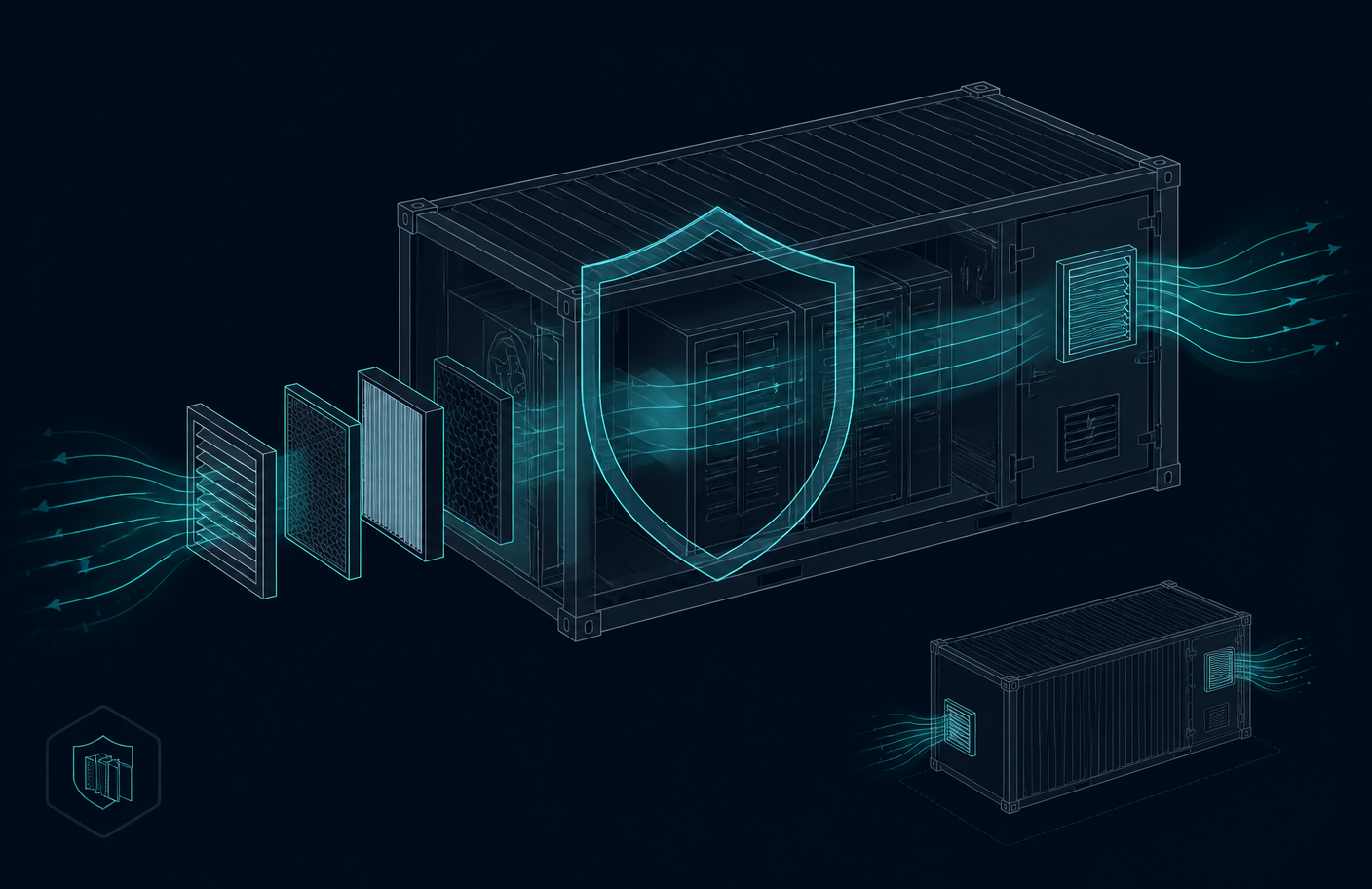
When a battery cell enters thermal runaway, hazardous and flammable off-gases can be released before or during a fire event. SafeCore™ is N54° Battery’s Norwegian-developed hazardous-gas mitigation solution, designed to capture and treat these gases before they are released from the BESS container.
By adding a dedicated gas-management layer to the system’s wider safety architecture, SafeCore™ is designed to reduce hazardous-gas exposure and limit the consequences of a thermal-runaway event. This is especially important for BESS installations near homes, workplaces, hospitals, data centres, ports, airports and other critical infrastructure.
Reduced off-gas exposure
Designed to limit the release of hazardous gases during thermal runaway.
Protection beyond the container
Supports safer conditions for nearby communities, site personnel and emergency responders.
Built for sensitive locations
Strengthens the safety case for BESS deployed in populated, urban and infrastructure-critical environments.
SafeCore™ complements cell monitoring, ventilation, fire detection and suppression. It is a hazardous-gas mitigation solution—not a fire-suppression system. The technology is being advanced through validation and system integration.